
Bath Salts Explained: Epsom, Dead Sea, Himalayan, and Sea Salt Compared
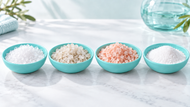
If you have ever stood in front of a shelf of bath salts and wondered whether Epsom salt, Dead Sea salt, Himalayan salt, or sea salt is the right choice, you are not alone. The word “salt” appears on every package, but these materials are not identical. Their mineral composition, grain size, color, scent, and finished product format can all affect the bath experience.
This guide explains the main types of bath salts in practical terms. You will learn how Epsom salt compares with Dead Sea, Himalayan, and sea salt; what each type is commonly used for in a bath routine; how to choose a product; and what to look for when developing a bath soak for a retail, spa, hospitality, or private-label brand.
Quick answer: there is no single best bath salt for everyone. Epsom salt is a familiar choice for a simple mineral soak, Dead Sea salt is often selected for a spa-style mineral experience, Himalayan salt is valued for its distinctive pink color and ritual appeal, and sea salt is a broad category that can be formulated into many different bath products.
What is a bath salt?
A bath salt is a water-soluble or water-dispersible mineral ingredient, or blend of ingredients, intended to be added to warm bath water. A finished bath soak may contain one salt or several salts along with fragrance, essential oils, botanicals, color, or other cosmetic ingredients. The experience depends on the complete formula—not simply on the name printed on the front of the package.
That distinction matters. Two products can both be called a bath salt while having very different textures, scent profiles, dissolution times, packaging requirements, and customer expectations. When comparing products, look at the ingredient list, directions, grain size, fragrance level, and intended use.
Epsom salt: a familiar mineral bath soak
Epsom salt is magnesium sulfate. It is one of the most familiar ingredients used in home bath soaks because it dissolves readily in warm water and fits easily into a simple bathing routine. Many shoppers search for an Epsom salt bath when they want a straightforward, recognizable mineral soak.
Epsom salt is often chosen for formulas positioned around relaxation, post-activity bathing, and uncomplicated self-care. It also works well as a base for scented products because it can carry a fragrance experience without competing with the rest of the formula.
For a ready-to-use option, explore our Epsom salt soaks. Brands looking for a different magnesium format can also browse magnesium flakes.
Dead Sea salt: a mineral-rich spa-style experience
Dead Sea salt comes from the mineral-rich waters of the Dead Sea. In a bath product, it is commonly used to create a mineral-focused, spa-inspired experience. Customers often choose Dead Sea salt because of its origin story, mineral profile, and association with professional spa rituals.
Dead Sea salt is not interchangeable with Epsom salt. The two have different compositions and product stories, so the best choice depends on what the customer wants from the experience. Dead Sea salt can be especially attractive in premium positioning, giftable bath products, and formulas where the origin and mineral narrative are part of the value.
See our Dead Sea bath salt soaks to compare ready-to-use options.
Himalayan salt: distinctive color and ritual appeal
Himalayan pink salt is known for its natural pink-to-rose appearance and recognizable origin story. In a bath soak, that color can make the product feel visually distinctive, especially when paired with clear packaging, natural design, or a calm spa aesthetic.
Himalayan salt is often selected by customers who care about the sensory and visual character of a product as much as the basic soak. The experience includes the appearance of the crystals, the ritual of adding them to the bath, and the overall presentation of the finished product.
If the color and origin are part of the appeal, explore our Himalayan bath salt soaks. Use the product directions because grain size and recommended amounts vary by formula.
Sea salt: a broad category, not one single formula
Sea salt is produced by evaporating seawater, but “sea salt” does not describe only one texture or one finished product. It may be available in fine, medium, or coarse grains, and it may be used alone or combined with fragrance, essential oils, botanicals, color, or other ingredients.
For bath products, the grain size and the rest of the formula make a meaningful difference. Fine grains may dissolve more quickly and create a smoother experience. Larger grains may be used for visual appeal or a more noticeable crystal texture, but they are not automatically better for every bath application.
Sea salt is also different from a body scrub. Bath salts are designed to dissolve or disperse in bath water; a scrub is designed to be applied to the skin and rinsed away. Explore our bath salt soaks for soaking products and our scrubs and masks for topical exfoliating products.
Epsom salt vs. Dead Sea salt vs. Himalayan salt vs. sea salt
The most useful comparison is not which ingredient sounds most impressive. It is which material fits the customer, the use case, and the finished product.
- Choose Epsom salt when you want a familiar magnesium sulfate bath soak with a simple, recognizable product story.
- Choose Dead Sea salt when mineral origin, spa positioning, and a premium soaking experience are central to the product.
- Choose Himalayan salt when color, origin, and a visually distinctive bath ritual are important to the customer.
- Choose sea salt when you want a flexible mineral base that can be formulated in different grain sizes, scents, colors, and product formats.
- Choose a blend when the finished product needs a more specific texture, appearance, dissolution profile, or sensory experience.
There is no responsible reason to promise that one salt will deliver the same result for every person. The best bath salts are the ones that match the customer’s preferences and are clearly labeled with appropriate directions.
How to choose the right bath salt for your routine
1. Start with the experience you want
Are you creating a quiet evening ritual, a post-workout soak, a spa-style bathing experience, or a gift? Start with the desired experience before choosing an ingredient. A calming evening product may call for a soft scent and a simple, low-clutter formula. A recovery-oriented product may need a clear, practical message and a format that is easy to measure.
For shoppers interested in an active routine, our muscle recovery and active recovery collection is a useful place to start.
2. Consider fragrance and sensitivity
Unscented products can be an important choice for people who prefer a neutral bath or who want to avoid fragrance. Scented products can make a bath feel more intentional, but essential oils and fragrance materials are not automatically appropriate for everyone. Follow the product label, avoid contact with the eyes, and stop use if irritation occurs.
3. Pay attention to texture and grain size
Grain size affects appearance, handling, and how quickly the material dissolves. It also affects packaging and the way a product pours from a pouch or jar. Fine grains may be practical for a fast-dissolving soak, while larger crystals can contribute to a more visual, tactile presentation. Neither is universally superior.
4. Match the product format to the customer
Single-use packets, jars, pouches, and larger refill formats serve different buying situations. A giftable product may need a polished presentation. A repeat customer may prefer a larger size. A spa or hospitality buyer may need a dependable format that is easy for staff to store and portion.
5. Read directions instead of guessing
Recommended amounts vary by formula, package size, tub size, and intended use. Follow the directions on the specific product rather than assuming that every bath salt should be measured the same way.
How to use bath salts safely
Add the amount recommended on the product label to warm running bath water and allow it to dissolve or disperse before entering the bath. Rinse the tub after use because mineral ingredients, oils, botanicals, and colorants may leave residue. Keep the product out of the eyes, do not ingest it, and store it closed in a dry place.
Patch-test scented or botanical products when appropriate, and discontinue use if irritation occurs. Anyone with a medical condition, a known sensitivity, or questions about bathing during pregnancy should speak with a qualified healthcare professional. This article is educational and is not medical advice.
For brands: developing bath salts for retail, spa, and private label
Choosing the salt is only one part of developing a successful bath product. A commercial formula also has to make sense for the intended customer, package, channel, and production process.
For a retail brand, the product story should be easy to understand in a product listing and on the package. For a spa or hospitality program, consistency, storage, portioning, and the guest experience may matter more than a long ingredient story. For a new private-label line, the formula, fragrance direction, packaging, labeling, and target price all need to work together.
Midwest Sea Salt Company works with businesses exploring bulk bath salt formulations and private-label bath and body products. If you are developing a custom project, bring a clear description of your intended product, customer, format, and sales channel so the right options can be evaluated before a commitment is made.
Our approach is to connect the ingredient choice to the final product. That may mean selecting Epsom salt for a familiar soak, combining mineral salts for a specific sensory profile, or choosing a different grain and packaging format for a retail or hospitality program. The right decision is the one that can be explained clearly, produced consistently, and supported by accurate labeling.
Frequently asked questions about bath salts
Which bath salt is best?
The best bath salt depends on the intended experience. Epsom salt is a familiar choice for a simple mineral soak. Dead Sea salt is often selected for a spa-style mineral experience. Himalayan salt offers distinctive color and ritual appeal. Sea salt is a flexible category with many possible textures and formulas.
Is Epsom salt the same as sea salt?
No. Epsom salt is magnesium sulfate, while sea salt is primarily sodium chloride produced from evaporated seawater. They have different compositions and different product stories.
Is Himalayan salt good for a bath?
Himalayan salt can be used in bath products when it is properly formulated and labeled for that purpose. Follow the directions for the specific product, because grain size, fragrance, and recommended amounts vary.
Can I mix different bath salts?
Some finished products are formulated as blends, but it is better to follow the directions on a finished product than to combine multiple products without knowing how the ingredients, fragrance, or colorants will interact.
How much bath salt should I use?
Use the amount listed on the product label. There is no universal measurement because product concentration, package size, tub size, grain size, and additional ingredients vary.
Explore bath salts from Midwest Sea Salt Company
Ready to compare? Start with our bath salt soak collection, then explore Epsom salt soaks, Dead Sea bath salt soaks, Himalayan bath salt soaks, and magnesium flakes. For businesses, learn more about bulk formulations and private-label manufacturing.
Whether you prefer Epsom, Dead Sea, Himalayan, or sea salt, the best choice is the one that fits your bathing routine and the experience you want to create
Continue Exploring Bath Salt Formulation
Want to go deeper? Compare Epsom salt and magnesium chloride flakes, learn about Dead Sea salt vs. Himalayan salt, and see why fine-grain and coarse-grain salt textures matter in bath and body products. Businesses can also review our bulk formulation services and private-label bath and body manufacturing options.