
Dead Sea Salt vs. Himalayan Salt: What’s the Difference in a Bath Soak?
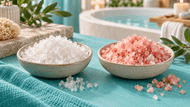
Dead Sea salt and Himalayan salt are both popular ingredients in mineral bath products, but they are not the same salt and they create different product experiences. If you are searching for “Dead Sea salt vs. Himalayan salt,” the useful answer depends on more than which one sounds more natural. Mineral composition, color, grain size, fragrance, packaging, and the intended customer all matter.
The Short Answer
Dead Sea salt comes from the Dead Sea region and is valued for its distinctive mineral character. Himalayan salt is mined from ancient salt deposits associated with the Himalayan region and is best known for its pink to rose-colored appearance. For a home bath, choose based on the experience you prefer. For a private-label or bulk bath salt product, choose based on the complete formula, product position, documentation, and packaging plan.
What Is Dead Sea Salt?
Dead Sea salt is collected from the Dead Sea region and contains sodium chloride along with other naturally occurring mineral salts. The exact composition, grain size, and appearance can vary based on the source and how the material is processed.
In a bath product, Dead Sea salt often supports a spa-inspired, mineral-focused position. It can be sold as a simple unscented soak or combined with fragrance, essential oils, botanicals, and other compatible bath ingredients. The finished product—not the salt name alone—determines the texture, scent, color, and overall customer experience.
Explore our Dead Sea bath salt soaks to see how this mineral source can be presented in ready-to-use products.
What Is Himalayan Salt?
Himalayan salt is mined from ancient salt deposits associated with the Himalayan region. It is primarily sodium chloride and is commonly recognized by its pink, rose, or warm-toned color, which comes from naturally occurring trace minerals.
In a Himalayan salt bath, appearance is often part of the product appeal. The color can create a distinctive visual identity in a pouch, jar, or giftable bath set. Grain size, fragrance, oils, botanicals, and packaging still determine how the product feels and performs as a complete bath formula.
Browse our Himalayan bath salt soaks for examples of this format.
Dead Sea Salt vs. Himalayan Salt: Key Differences
- Source: Dead Sea salt comes from the Dead Sea region. Himalayan salt comes from ancient salt deposits associated with the Himalayan region.
- Mineral character: Dead Sea salt is known for its broader mineral-salt profile. Himalayan salt is primarily sodium chloride with trace minerals.
- Appearance: Dead Sea salt is usually white or pale. Himalayan salt is commonly pink, rose, or warm-toned.
- Product story: Dead Sea salt often supports a spa and mineral-focused story. Himalayan salt often supports a natural-color and visual-presentation story.
- Texture: Both can be offered in different grain sizes, so the actual feel depends on the material selected and the rest of the formulation.
- Customer decision: A shopper choosing a Dead Sea salt bath may prioritize mineral origin and a spa-style experience. A shopper choosing a Himalayan salt bath may prioritize natural color, appearance, and a distinctive ritual.
Which Salt Is Better for a Bath?
There is no universal winner. Choose Dead Sea salt if you want a spa-inspired bath and prefer a mineral-focused product story. Choose Himalayan salt if the natural pink color and visual presentation are important to you.
Also compare the complete product: fragrance, grain size, added oils, botanicals, directions, package size, and intended use. Two products made with the same salt source can feel very different when the formulas and presentation are different.
What Should Brands Consider for Private-Label Bath Salts?
For a private-label bath salt project, the salt source is only the starting point. The strongest product concepts connect the ingredient choice to a clearly defined customer and use occasion.
- Positioning: Decide whether the product should feel spa-inspired, natural, giftable, fragrance-led, or centered on a particular bath ritual.
- Color and appearance: Himalayan salt may provide a naturally warm visual identity, while Dead Sea salt may support a cleaner, mineral-focused presentation.
- Formula design: Review grain size, fragrance, essential oils, botanicals, color, and any additional ingredients together rather than selecting the salt in isolation.
- Packaging: Match the pouch, jar, closure, label, and pack size to the product’s texture, moisture sensitivity, customer, and retail position.
- Documentation: Confirm ingredient specifications, safety documentation, batch information, labeling requirements, and any testing needed before launch.
If you are developing private-label bath salts, our bulk formulation services can be a starting point for discussing a custom product concept. Exact formulas, packaging, minimums, documentation, and production requirements should be reviewed for each project.
What About Bulk Bath Salts?
Bulk bath salts require the same product decisions at a larger operational scale. Consistent grain size, fragrance distribution, moisture control, packaging format, batch documentation, and filling requirements all affect the finished product.
Before moving forward with a bulk bath salts program, define the target format, pack size, scent direction, label claims, sales channel, and expected production volume. That information helps determine whether Dead Sea salt, Himalayan salt, or another mineral base is the better fit for the project.
Frequently Asked Questions
Is Dead Sea salt the same as Himalayan salt?
No. They come from different sources and have different mineral characteristics and appearances. Dead Sea salt is associated with the Dead Sea region, while Himalayan salt is mined from ancient deposits associated with the Himalayan region.
Which is better, Dead Sea salt or Himalayan salt?
It depends on the intended experience. Dead Sea salt may fit a spa-inspired, mineral-focused product. Himalayan salt may fit a product where natural color and visual presentation are important. Neither should be treated as universally better.
Can Dead Sea salt and Himalayan salt be used in custom bath products?
They can both be evaluated for custom bath products, but they should not be treated as interchangeable. The salt source, grain size, fragrance system, supporting ingredients, packaging, documentation, and label language should be reviewed as one complete product system.
Final Takeaway
Dead Sea salt and Himalayan salt are different ingredients with different stories, appearances, and product-positioning opportunities. For a home bath, choose the format that fits the ritual you want to create. For private-label bath salts or bulk bath salts, make the decision based on the customer, complete formulation, documentation, packaging, and production requirements—not on the ingredient name alone.