
Fine-Grain vs. Coarse-Grain Salt: Choosing the Right Texture for Bath Salts and Scrubs
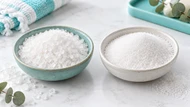
When people compare salt scrubs, they often focus on the salt source first: Dead Sea salt, Himalayan salt, sea salt, or another mineral ingredient. In practice, the texture can matter just as much. Fine-grain and coarse-grain salt create very different product experiences, and choosing the wrong texture can affect comfort, rinse-off, packaging, customer reviews, and repeat purchases.
For a body scrub designed for regular topical use, fine-grain salt is generally the better starting point. It can provide a consistent exfoliating feel without the sharp, overly aggressive sensation that coarse crystals may create. Coarse salt has a place in certain product concepts, but it should not be treated as the default for a leave-on or rinse-off body scrub.
This guide explains how grain size affects salt scrubs and bath salts, what customers notice, and what brands should consider when developing a retail, bulk, or private-label product.
The Short Answer: Fine Grain Is Usually the Better Scrub Texture
Fine-grain salt is typically preferred for body scrubs because the particles feel smoother and more consistent across the skin. It is easier to spread, easier to combine with oils or other formula components, and less likely to feel harsh when the product is used as directed.
Coarse-grain salt creates a more pronounced crystal texture. That can look visually interesting in a jar or pouch, but a strong visual texture does not automatically create a better customer experience. If the particles feel too sharp or abrasive, customers may use less product, avoid sensitive areas, or decide not to purchase the product again.
The right grain size depends on the formula and the intended use, but for most everyday body scrubs, fine grain provides the most reliable balance of exfoliation, comfort, and consistency.
What Does Fine-Grain Salt Feel Like in a Body Scrub?
Fine-grain salt has smaller, more uniform particles. In a finished scrub, that usually creates a smoother spread and a more even exfoliating sensation. The product can feel substantial without feeling like it is made from sharp pieces of crystal.
Fine grain also works well when the scrub contains oils, fragrance, botanicals, or other supporting ingredients. The smaller particles can distribute more evenly through the base, which helps the product feel consistent from the first scoop to the last.
For customers, the benefit is simple: the scrub feels easier to control. They can apply it to arms, legs, shoulders, or other areas without the product feeling unnecessarily aggressive.
What Does Coarse-Grain Salt Feel Like?
Coarse-grain salt contains larger crystals that create a stronger scrub texture. Depending on the crystal shape and the rest of the formula, it may feel rougher, sharper, or more uneven than a fine-grain scrub.
That does not make coarse grain automatically wrong. It may be considered for a limited-use foot-care product, a highly textured concept, or a product where the formulator has specifically evaluated the particle shape and intended application. However, it requires more careful product positioning and directions than a typical fine-grain body scrub.
A brand should not use coarse crystals simply because they look more dramatic in a product photo. Texture must support the actual customer experience, and the formula should be evaluated on skin before the product is packaged or marketed.
Fine-Grain vs. Coarse-Grain Salt for Bath Salts
Bath salts and body scrubs are related, but they are not the same type of product. A bath salt is dissolved or dispersed in bath water, while a body scrub is applied directly to skin and then rinsed away. That difference changes how grain size should be evaluated.
- For body scrubs: fine grain is generally the more comfortable and versatile starting point.
- For bath soaks: crystal size can influence how quickly the ingredient dissolves, how it looks in the package, and how the customer measures the product.
- For foot-care products: a more noticeable texture may be appropriate, but the formula and directions must match the intended use.
- For facial products: salt should not be selected by grain size alone; facial skin requires a separate product-development decision.
In other words, the phrase “bath salt grain size” should not be treated as a universal answer for every product. The best texture depends on whether the customer is soaking, scrubbing, or using the formula on a more sensitive area.
Why Salt Source and Grain Size Are Different Decisions
Dead Sea salt and Himalayan salt can each support a distinctive product story, but the source of the salt does not determine whether the finished scrub should be fine or coarse. Mineral identity, color, sourcing, particle size, fragrance, oil content, and packaging are separate formulation decisions.
Our Dead Sea Salt Scrubs collection and Himalayan Salt Scrubs collection show how different salt profiles can support different product concepts. The texture still needs to be chosen for the intended use and customer experience.
For a direct product example, see our Exfoliating Himalayan Salt Scrub. A product like this should be evaluated as a complete scrub system rather than judged by the salt name alone.
How Grain Size Affects the Finished Formula
Grain size changes more than the way a scrub feels between the fingers. It can affect the way a formula mixes, fills, labels, and performs during use.
- Mixing: Fine particles may distribute more evenly through oils, fragrance, and other ingredients, while larger crystals can settle or separate differently.
- Application: Fine grain usually spreads more easily and creates a more uniform feel over the skin.
- Rinse-off: Particle size, oil level, and the rest of the formula can influence how cleanly the scrub rinses away.
- Packaging: Coarse crystals may require more attention to pouch seals, jar openings, scoops, and fill consistency.
- Directions: The intended body area and frequency of use should be reflected in the instructions and product positioning.
- Quality control: Particle size should be consistent from batch to batch so the customer experience does not change unexpectedly.
This is why a good salt scrub is not simply salt mixed with oil. The final experience depends on the complete formula and how that formula is manufactured and packaged.
What Customers Usually Want from a Salt Scrub
Most customers want a scrub that feels effective but manageable. They want to understand where to use it, how much to apply, and what their skin will feel like after rinsing. A fine-grain scrub can make those expectations easier to meet because the texture is more predictable and less intimidating.
Customers also notice whether a product feels consistent. If one scoop feels smooth and the next contains unusually sharp crystals, the product can seem poorly controlled even when the ingredients are otherwise attractive. Consistency is part of the product quality, not just a manufacturing detail.
Brands should also be careful with claims. It is reasonable to describe exfoliation, texture, application, scent, and the intended body-care routine. It is not appropriate to promise that a scrub will treat a medical condition or guarantee a specific health outcome.
Choosing a Salt Scrub Texture for Private Label and Bulk Projects
For private-label and bulk projects, texture should be decided during the product brief rather than after the formula has already been selected. A brand should define the customer, the intended body area, the price point, the package, the fragrance direction, and the desired sensory experience before approving the final grain size.
Important questions include:
- Is the product intended for everyday body exfoliation, foot care, spa use, or a specialty ritual?
- Should the scrub feel smooth and approachable or visibly textured and substantial?
- Will the product be packaged in a pouch, jar, tube, or another format?
- Does the formula need to remain consistent across larger production runs?
- What directions and usage language will help customers use the product appropriately?
- Does the product need to fit beside existing salt scrubs or other body-care products in the brand line?
Our bulk formulation services can help brands evaluate these decisions for larger product programs. For a finished brand concept, review our private-label bath and body services. Exact formula, packaging, minimums, documentation, and production requirements should be reviewed for each project.
How We Would Approach the Decision
For a standard body salt scrub, we would begin with a fine-grain texture and then evaluate the complete formula on skin. We would review how it spreads, how it feels during massage, how it rinses, how it interacts with fragrance and oils, and how consistently it fills into the selected package.
If a customer specifically wants a coarse appearance or a stronger physical texture, that should become a deliberate product-development decision. The formula, intended use, warnings, packaging, and customer expectations all need to support that choice. A coarse texture should never be added only to make the product look more dramatic online.
Frequently Asked Questions
Is fine-grain salt better for body scrubs?
For most everyday body scrubs, fine grain is the better starting point because it usually feels smoother, spreads more evenly, and is easier for customers to control. The final choice still depends on the complete formula and intended use.
Are coarse salt scrubs better at exfoliating?
Not necessarily. A stronger or rougher sensation does not automatically mean better exfoliation. Comfort, consistency, application, and the intended body area are all part of a successful scrub experience.
Can Dead Sea salt and Himalayan salt both be used in fine-grain scrubs?
They can be considered for fine-grain scrub concepts, but the salt source, particle size, formula, packaging, and product claims should be evaluated separately. The source of the salt does not determine the correct scrub texture by itself.
What grain size is best for a private-label salt scrub?
For a typical body scrub, fine grain is generally the most versatile place to start. A private-label project should then evaluate the intended customer, body area, fragrance, oils, package, directions, and production requirements before final approval.
Is a salt scrub the same as a bath salt?
No. A salt scrub is applied directly to skin and rinsed away, while bath salt is designed to be added to bath water. The correct texture, directions, and formula depend on the product type.
Final Takeaway
Fine-grain and coarse-grain salt are not interchangeable texture choices. Fine grain is generally the better option for a comfortable, consistent body scrub, while coarse grain should be reserved for specific concepts that have been deliberately formulated and tested for their intended use.
The best salt scrub combines the right mineral source, particle size, fragrance, supporting ingredients, packaging, directions, and production controls. Whether you are choosing a scrub for personal use or developing a new retail, bulk, or private-label product, texture should be treated as a core product decision—not an afterthought.
Continue Exploring Salt Product Development
Texture is only one part of the finished product. Compare salt types in our bath salt guide, review sea salt vs. brown sugar scrubs, and see how Dead Sea and Himalayan salt support different product concepts. Brands can also review our bulk formulation guide and private-label manufacturing guide.