
Epsom Salt vs. Magnesium Flakes: Which Is Better for Your Bath Routine?
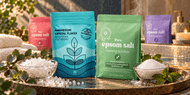
Epsom salt and magnesium flakes are both popular choices for a mineral-based bath, but they are not the same product. One is magnesium sulfate and the other is generally magnesium chloride. That difference matters when you are choosing a ready-to-use soak, comparing product experiences, or developing a custom bath product for a retail or private-label line.
The Short Answer
Epsom salt is magnesium sulfate. Magnesium flakes are typically magnesium chloride flakes. Neither is automatically “better” for every bath routine or formulation. The right choice depends on the experience you want to create, the rest of the formula, the customer you are serving, and how the finished product will be packaged and positioned.
What Is Epsom Salt?
Epsom salt is magnesium sulfate, a familiar mineral ingredient used in bath soaks. It is commonly available as a granular or crystalline material and is often selected for straightforward, recognizable bath products.
For home use, Epsom salt works well when you want a simple soak with clear measuring directions. For a retail product, it can support a familiar mineral-bath position, whether it is sold plain or blended with fragrance, essential oils, botanicals, or other compatible ingredients.
Explore our Epsom salt soaking solutions to see how different scent and product-positioning choices change the finished experience.
What Are Magnesium Flakes?
Magnesium flakes are generally magnesium chloride flakes. Compared with granular Epsom salt, flakes have a different physical form and create a different visual and sensory experience in the package and bath.
Magnesium flakes can be used in simple unscented soaks or in more developed bath products built around calming, sleep-focused, or recovery-oriented positioning. Those descriptions should guide the customer experience, not become unsupported medical promises.
See our magnesium flakes collection for examples of unscented and blended bath-soak formats.
Epsom Salt vs. Magnesium Flakes: The Practical Differences
- Chemical form: Epsom salt is magnesium sulfate. Magnesium flakes are generally magnesium chloride.
- Physical format: Epsom salt is commonly granular or crystalline, while magnesium flakes are flatter and flake-like.
- Visual presentation: The flake format can create a more distinctive look in a clear pouch or jar. Epsom salt usually presents as a familiar crystal or granular soak.
- Product positioning: Epsom salt often supports a traditional mineral-bath message. Magnesium flakes can support a more specialized or modern bath-routine message.
- Complete formula: Scent, grain or flake size, oils, botanicals, color, packaging, and directions all affect the finished product. The ingredient name alone does not determine the customer experience.
Which One Is Better for a Home Bath?
Choose Epsom salt when you want a familiar, easy-to-measure mineral soak and a simple product format. Choose magnesium flakes when you prefer the look and feel of flakes or want a bath product with a more specialized mineral-ingredient story.
If you have sensitive skin, follow the product directions, start conservatively, and stop using the product if irritation occurs. Avoid treating either ingredient as a cure or guaranteed solution for a medical condition.
What Should Brands Consider for Private Label or Custom Projects?
For a private-label or custom bath product, the decision is bigger than choosing one ingredient over another. Start with the customer and the product promise: Is the product meant to feel simple and familiar, spa-inspired, giftable, fragrance-led, or centered on a particular bath ritual?
Then review the practical formulation decisions:
- Ingredient identity: Confirm the intended mineral form and the correct ingredient declaration for the finished product.
- Texture and appearance: Decide whether the product should look granular, flaked, blended, colored, or botanically accented.
- Fragrance and supporting ingredients: Select scents, oils, botanicals, and other additions that fit the product concept and remain compatible with the formula.
- Packaging: Match the pouch, jar, closure, label, and pack size to the product format, customer, and expected use.
- Documentation and quality review: Confirm the available specifications, safety documentation, batch information, labeling requirements, and any testing needed before launch.
Our bulk formulation services can be a starting point for brands developing private-label bath salts, custom bath products, or larger bulk bath salts programs. Private-label projects may involve formula review, scent and ingredient decisions, packaging, documentation, labeling, and production planning. Exact formulation, packaging, minimums, and production requirements should be reviewed for each project.
Can Both Ingredients Be Used in Custom Bath Products?
They can both be considered for custom bath products, but they should not be treated as interchangeable by default. The mineral form, particle or flake size, fragrance system, packaging, directions, and final label all need to be evaluated together. A successful custom project begins with a clear product brief and ends with a formula and package that are consistent, supportable, and appropriate for the intended market.
Frequently Asked Questions
Is Epsom salt the same as magnesium flakes?
No. Epsom salt is magnesium sulfate, while magnesium flakes are generally magnesium chloride. They have different chemical identities and physical formats.
Which one is better for muscle recovery?
That question should be approached carefully. Product positioning and customer expectations should not replace appropriate medical guidance. From a product-development standpoint, the useful comparison is the mineral form, sensory experience, directions, supporting ingredients, and claims that can be responsibly supported.
How do I choose between them for a new bath product?
Choose based on the desired customer, texture, appearance, fragrance direction, packaging, price point, documentation, and production requirements. If the project is intended for private label or bulk production, define those requirements before selecting the final formula.
Final Takeaway
Epsom salt and magnesium flakes are not interchangeable, and there is no universal winner. Epsom salt offers a familiar magnesium sulfate format, while magnesium flakes offer a different magnesium chloride format and a distinctive flake presentation. For home use, choose the experience that fits your routine. For private-label and bulk projects, evaluate the complete product system—from ingredient identity through formulation, documentation, packaging, labeling, and customer positioning.