
Bath Salts: Benefits, Types and How to Use Them
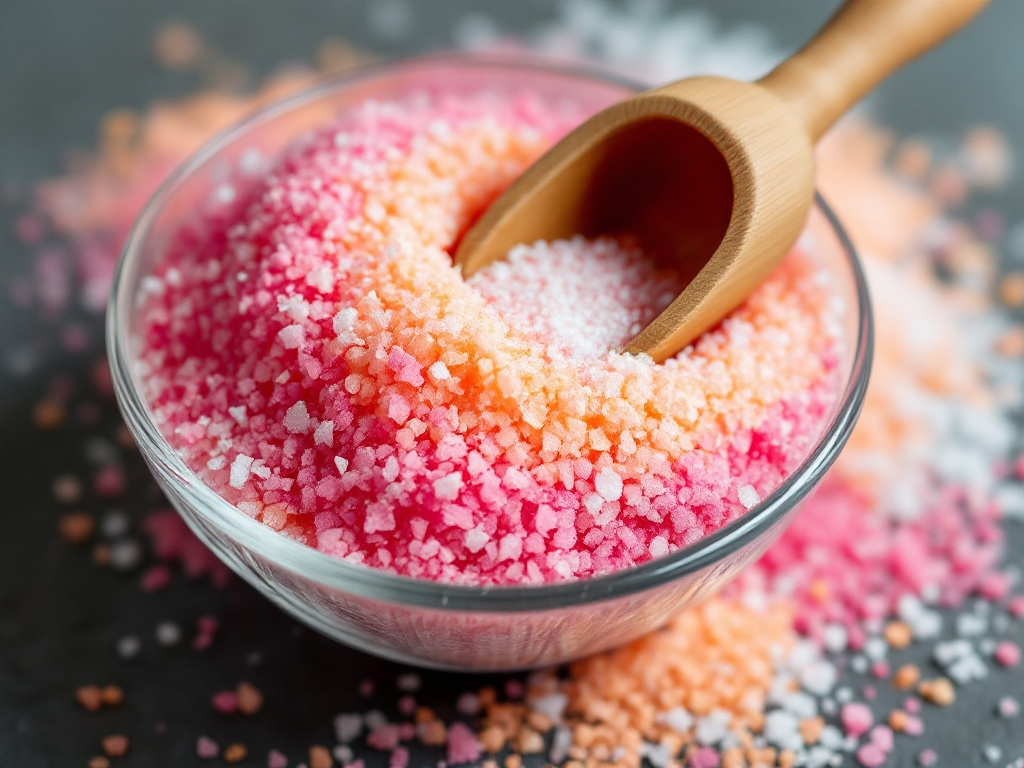
Bath salts are mineral-based products added to bathwater. Depending on the finished formula, they provide a particular mineral base, scent and soaking experience. Their useful place in a routine is easier to understand when you separate those features from claims about detoxification, mineral replenishment or medical treatment.
This guide compares the main salt types, explains what to look for on a finished product and walks through practical use. It also distinguishes a dissolved bath soak from a physical body scrub.
If your next step is choosing a finished product for everyday use, see choosing bath salts for a simple self-care routine. It focuses on selecting a mineral base, scent and practical format after you understand the ingredient differences.
Epsom Salt: Magnesium Sulfate
Epsom salt is magnesium sulfate. It is chemically different from the sodium chloride that makes up ordinary table salt. Plain Epsom crystals and a scented multicomponent Epsom soak are also different products: check the actual label rather than assuming every bag has the same ingredients.
Compare Epsom salt soaks by scent, package size and use directions. For more ingredient context, read what Epsom salt is used for in bath and body products. A salt bath should not be presented as a reliable way to correct a magnesium deficiency or speed injury recovery.
Dead Sea Salt: A Different Mineral Profile
Dead Sea salts have a composition distinct from ordinary sea salt and from Epsom salt. The ingredient specification and the concentration used matter when interpreting research. A study of one salt solution does not establish the same outcome for every fragranced retail bath product.
Review Dead Sea bath salt soaks by the complete ingredients and the intended bath use. If you are looking specifically at research claims, our guide to interpreting bath-salt skin research explains the limits of applying a study to a finished product.
Himalayan Pink Salt: Rock Salt for a Different Presentation
Himalayan pink salt is mainly sodium chloride with trace constituents that contribute to its color. Counting trace minerals does not show that soaking supplies a nutritional dose or balances the body’s pH.
Compare Himalayan bath salt soaks for their formula, grain and scent choices. Our Himalayan salt bath benefits guide explains what is reasonable to expect and how the ingredient differs from Epsom salt.
Mediterranean Sea Salt
Sea salt is obtained from seawater, with composition and grain affected by sourcing and processing. A fine-grain unscented option and a coarse scented soak can handle differently. Neither the geographic name nor the crystal size proves a greater health benefit.
Browse Mediterranean sea salt soaks and check the grain, ingredients and bath directions. Do not rub coarse soaking crystals directly on skin as a substitute for a formulated scrub.
What Benefits Can a Bath Salt Product Offer?
A soak can be a convenient way to add a scent and a familiar personal-care step to a warm bath. You may enjoy the atmosphere and the time set aside for yourself. Compare products by the experience they actually provide, not promises of toxin removal, improved circulation, anxiety treatment or mineral absorption.
Skin response varies. Salt may sting broken, freshly shaved or irritated skin, and fragrance may be unsuitable for some people. More salt, a hotter bath and a longer soaking time do not automatically make a product more useful.
How to Use Bath Salts
- Read the current label. Follow the specific product’s amount, intended use and soaking directions.
- Prepare comfortable water. Avoid excessive heat, and allow the measured crystals to dissolve as directed.
- Keep the formula intact. Do not add essential-oil drops, carrier oils or other products unless the directions specifically support them.
- Monitor your comfort. Stop if the product irritates your skin or you feel uncomfortable.
- Finish and clean up. Follow rinse directions, dry gently and remove any residue from the tub.
There is no single cup amount or soaking schedule for every bathtub, foot basin, child or medical situation. If directions are missing, obtain them rather than escalating the dose. People with conditions affecting skin, circulation or sensation should seek appropriate individual advice before soaking.
Bath Salt vs. Salt Scrub
A bath soak dissolves in water. A salt scrub uses solid grains with a suitable formula to mechanically exfoliate the skin. Soaking in dissolved salt does not provide the same rubbing action. Choose a product intended for the task and do not turn coarse bath salt into a body or facial scrub.
Choosing by Scent and Storage
Check the complete fragrance and botanical list, even for a product described as natural. For a simple DIY base, keep it unscented unless you have a complete appropriate bath formulation. Our guide to essential oils, dilution and bathwater dispersion explains why salt is not a water dispersant.
Keep the package closed, use a dry scoop and follow storage directions. For changes in clumping or aroma, consult our bath-salt storage and shelf-life guide rather than assuming that a pleasant smell proves suitability.
For Stores, Spas and Brands
Wholesale covers established branded products for resale. Private label concerns finished products under your brand. Bulk formulations suit larger quantities supplied without individual retail packaging. Choose the route that matches your actual operating model.