
Does Epsom Salt Expire? Shelf Life, Clumping, and Storage
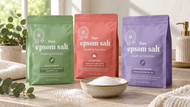
Does Epsom salt expire? Plain magnesium sulfate is a mineral material, so it should not be evaluated like a fresh food. However, that does not make every opened bath product suitable for indefinite use. A plain Epsom salt, a lavender-scented soak, and a mineral blend with clay and botanical extracts have different ingredient and storage considerations. Follow any date, handling instructions, and product-specific advice provided by the manufacturer.
The most useful way to answer whether an old bag is still appropriate is to identify the formula, understand its storage history, and distinguish changes in appearance from evidence of contamination. Here is how to make those decisions with examples from The Midwest Sea Salt Company's range.
First identify what is actually in the bag
The words Epsom salt may describe the primary ingredient rather than the complete formula. Our Unscented Pure Epsom Salt Soak lists magnesium sulfate, with optional colorants depending on the selected configuration. That differs from an aromatic finished product even though both are mineral soaks.
Soothing Lavender Epsom Salt Soaking Solution includes lavender essential oil. Vitamin Citrus Epsom Salt Soaking Solution has a citrus aromatic direction. When considering storage and quality, you are evaluating the complete product—including its aromatic ingredients and packaging—not only the mineral.
A multi-ingredient product goes another step further. Mentally Elsewhere Bath & Foot Soak combines several salts with bicarbonate, kaolin, botanical extracts, and fragrance. It is not simply a bag of plain Epsom crystals, and an internet claim about raw magnesium sulfate cannot establish the shelf life of that finished blend.
What does shelf life mean for a bath product?
Shelf life includes more than whether a product dissolves. It concerns whether the formula remains suitable and performs as expected under its intended storage and use conditions. An aroma, appearance, texture, or packaging change may be relevant even when the ingredient list has not changed.
The FDA's cosmetic shelf-life guidance explains that handling, moisture, heat, air, and formulation can affect a cosmetic over time. A missing expiration date is therefore not proof that storage conditions do not matter. It is also not a reason to invent a fixed two-year or five-year promise for every bath blend.
If you need a product-specific answer, retain the original bag and ask the supplier with the product name, any lot code, and information about when it was opened. Those details are more useful than a photograph of loose crystals in an unlabeled jar.
Clumping, crystal changes, and questionable product
A dry soak can become harder to pour after exposure to humid air or water. Clumping tells you that its physical condition has changed; it does not by itself prove either spoilage or safety. You still need to consider the formula and how it was handled.
Compare two situations. In the first, a properly closed bag has a small dry lump and no known exposure to foreign material. In the second, a cup of bathwater splashed into an open pouch and the contents were later allowed to dry. Both may leave lumps, but the second has a materially different handling history. Appearance alone cannot erase that difference.
Epsom salt is commonly supplied in a hydrated crystalline form. Water that is part of a mineral's crystal structure is not the same practical storage issue as dirty water introduced by a wet scoop. Keep the distinction clear instead of concluding that every reference to water means the bag is contaminated.
When to stop using a stored soak
Do not use a product with visible mold, foreign material, a damaged package that allowed contamination, or an unusual odor suggesting that the formula has changed. If a wet portion was returned to the bag or its storage history is unknown, replace it or obtain specific advice rather than relying on the fact that salt is present.
A smell test cannot certify safety. Likewise, a scent becoming weaker does not establish that adding essential oil will make the product suitable again. Follow the manufacturer's instructions if a date has passed, and ask about questionable changes before using a product on your skin.
This is especially relevant to homemade mixtures. Adding oils, botanical ingredients, or other components creates a different product from the mineral you started with. Our DIY bath soak storage article discusses that setting; do not carry a raw-ingredient storage assumption over to a newly mixed formula.
How packaging changes everyday handling
A resealable stand-up pouch is convenient, but the zipper only helps when it is clean and fully closed. Salt caught in the closure or an opening left above a steamy tub makes careful storage harder. Wipe the outside dry and check that the seal has actually engaged.
A jar can be convenient for a single session or decorative display, but transferring a whole bag has tradeoffs. You may lose the label, instructions, ingredient information, and lot identification. If you use a secondary container, keep it clean and dry and retain the original packaging with the product details.
Do not treat a decorative container as a moisture-control guarantee. A loose lid in a humid bathroom can be less practical than the original properly closed package in a dry cupboard. Consider where the product lives between uses, not only how it looks beside the bath.
A storage routine that avoids common problems
- Read the storage instructions before opening the product.
- Write the opening date on the package if that will help you track it.
- Measure the session's dry portion before starting the bath or foot basin.
- Keep the remaining pouch away from running water and steam.
- Use a clean, dry scoop and never return a wet portion.
- Close the package fully and store it in a cool, dry place away from direct sunlight.
If several people share the product, keep the method simple enough for everyone to follow. A dedicated dry scoop stored outside the pouch and a clearly designated cupboard can be more effective than a long set of instructions nobody remembers.
Choose a size that matches how you use it
A large package can be useful for an established routine, but buying more than you can handle and store sensibly creates unnecessary work. The customizable unscented Epsom option offers multiple package sizes, while the aromatic three-pound soaking solutions offer a different format. Compare the actual option you are selecting rather than judging by the headline product name alone.
If you want to compare mineral types before choosing a larger quantity, the Unscented Bath Salt Sampler Set includes individual evaluation jars of Dead Sea, Pacific sea, Himalayan, and Epsom salts. It helps answer a texture and mineral-selection question; it is not evidence that all four materials share the same use or storage instructions.
Can old Epsom salt be restored?
Do not add water, heat a scented blend, or leave it in direct sun to try to restore it. Those steps change the handling conditions and do not establish that a questionable product is safe. Breaking a dry lump and restoring a finished formula's original quality are not the same task.
For a bag you cannot confidently identify or evaluate, replacing it is the practical option. For your next purchase, choose the formula and size you intend to use, keep the label, and protect the remaining contents. Browse our Epsom salt soaks with those everyday decisions in mind.