
How to Create a High-Quality Body Scrub at Home (and When to Scale It)
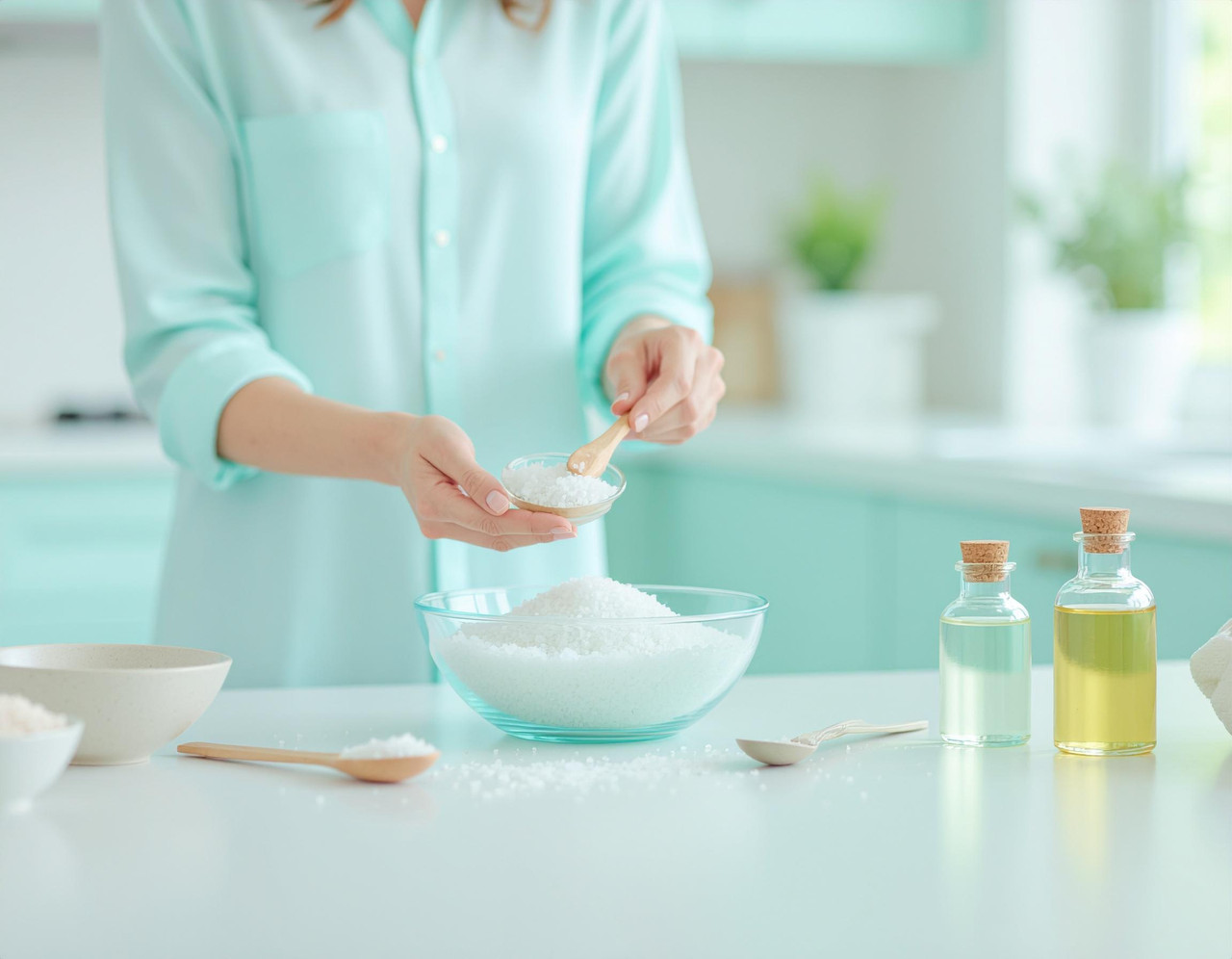
A useful homemade body scrub starts with a clear purpose: gently removing some loose surface skin cells from an area of intact body skin. Texture and handling matter more than a long ingredient list. Begin with a small unscented trial, observe how it feels and avoid assuming that a pleasant home mixture is ready to store or sell.
Choose the Particle Base
Use a fine-grain ingredient documented for the intended body-care application. Coarse bath crystals and decorative salts are poor substitutes for a suitable scrub grain. Check the fine-grain option for unscented Mediterranean sea salt and avoid a pre-fragranced soaking product when making an unscented base.
Salt and sugar also behave differently in a mixture. Read our body scrub comparison guide if you are still deciding on the exfoliating base.
Choose the Oil by Feel and Tolerance
A cosmetic carrier oil contributes slip and an emollient feel. Compare skin oils by ingredient identity and texture, and use an option you already tolerate. More oil can create pooling and a slippery finish; less can leave a dry, difficult-to-spread mixture.
Record a Repeatable Home Trial
For a small trial, use 2 teaspoons fine-grain bath/body-grade salt suitable for a scrub and 1 teaspoon of a cosmetic carrier oil you already tolerate. Keep the bowl and spoon clean and dry. Treat the result as an immediate-use personal experiment.
- Write down the salt's grain option and the oil's ingredient name before mixing. "Sea salt and oil" is not enough detail to compare two trials reliably.
- Combine the measured ingredients and note whether the texture is scoopable, dry or pooled with oil. Change one variable at a time in a later fresh trial so you can identify what changed the feel.
- Try a very small amount on a limited area of intact, damp body skin. If tolerated, use light pressure on arms or legs, avoiding the face and delicate areas. Rinse thoroughly, pat dry and moisturize if needed.
- Discard leftovers after the session and clean the equipment and bathing surface. Record your observations rather than keeping the sample to judge an untested shelf life.
Our step-by-step sea salt scrub recipe shows the basic mixing method. A production formula needs its own work by weight, ingredient specifications and evaluation; multiplying spoon measures does not establish a formula ready for sale.
Do not use a scrub on cuts, inflamed skin, sunburn or freshly shaved areas. Stop if it stings or irritates. Oil can make the floor slippery. The American Academy of Dermatology’s exfoliation guidance explains why method and frequency should fit your skin rather than a universal schedule.
When Should You Use a Body Scrub?
Use the scrub only when the skin is intact and comfortable, following the chosen product or recipe’s intended application. Do not scrub immediately after shaving, on sunburn or on inflamed areas. A body scrub is not automatically appropriate for the face.
In a shower routine, follow the finished product’s directions for placement around cleansing and rinsing. Rinse all particles away and finish with a suitable moisturizer if needed. You do not need to add other exfoliating steps in the same session.
How Often Should You Use It?
There is no universal schedule. Your skin, particle texture, pressure and other active products all matter. Start cautiously and judge the response rather than assuming daily use or a fixed twice-weekly routine is necessary. Redness, stinging or persistent tightness are reasons to stop and simplify.
Adding Scent Is a Separate Formulation Step
This home batch is unscented. A universal “10–20 drops of fragrance oil” instruction does not account for the particular fragrance, finished concentration or intended body area. Use a complete appropriate formula with supplier restrictions and finished-product assessment, or choose a finished scented scrub.
Why Make Only a Small Batch?
This home mixture has not undergone preservative, safety or stability evaluation. A closed jar does not demonstrate that it will remain suitable for three or six months, and vitamin E is not a substitute for a complete preservation system. Introducing shower water, honey, fresh ingredients or botanicals changes the mixture further. Make it for immediate use and discard leftovers rather than storing a wet scrub.
What Changes Before You Sell a Scrub?
Retail production needs a defined formula by weight, suitable raw-material specifications, an appropriate safety and stability review, controlled manufacturing, packaging and compliant labeling. A small home batch’s appearance does not establish any of those requirements.
Review our private-label program for finished branded units or bulk formulations if your business will manage filling. Account for labor, contamination control, container compatibility and labeling responsibilities before assuming that repackaging is the simpler option.