
DIY Lavender Sea Salt Scrub: Refresh Your Skin Naturally
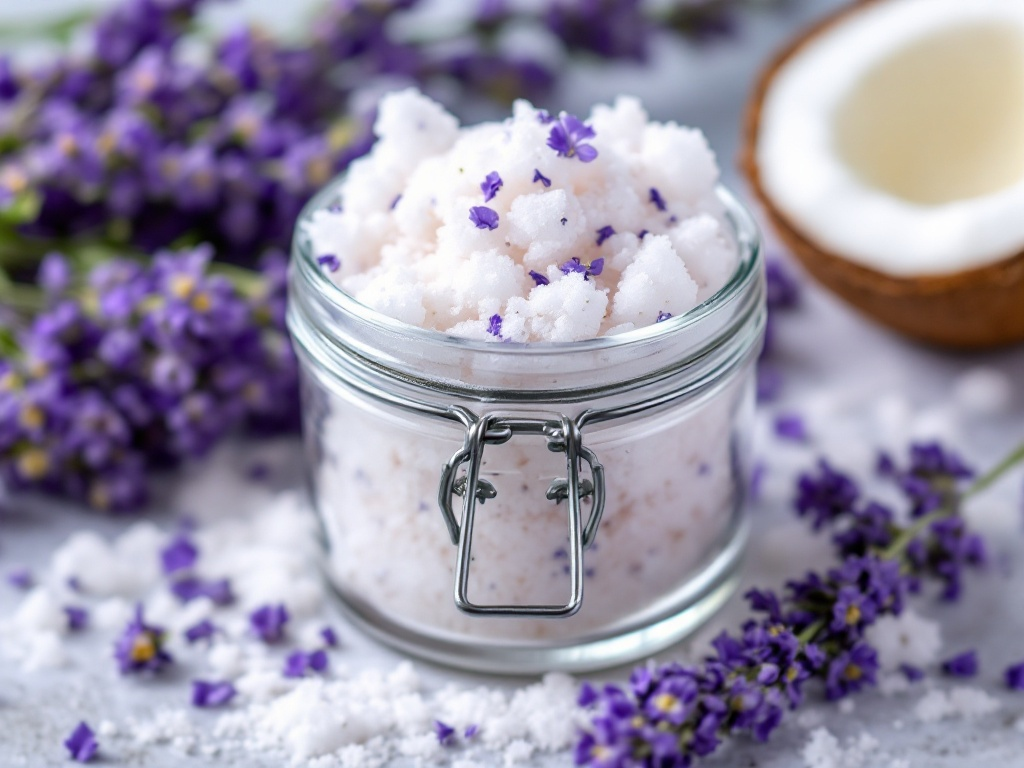
A lavender sea salt scrub combines two separate ideas: the physical exfoliation supplied by salt and the aroma supplied by a properly formulated scented product. For a home experiment, start with a small unscented base. If lavender scent is the priority, a finished lavender scrub is more practical than improvising an essential-oil dose.
What Sea Salt Contributes
Fine salt grains provide mechanical exfoliation. Grain shape, pressure and the condition of your skin determine how abrasive the scrub feels; a natural ingredient can still irritate. Review the fine-grain option for unscented Mediterranean sea salt before using it in a body mixture.
The purpose is to remove some loose surface skin cells and leave the area feeling smoother. Salt should not be described as drawing toxins out of the skin or delivering a guaranteed mineral-health benefit.
Check the Base Before Choosing a Lavender Scent
Start with an unscented trial so you can judge the salt-and-oil texture on its own. Measure 2 teaspoons fine-grain bath/body-grade salt suitable for scrubbing and 1 teaspoon of a cosmetic carrier oil you already tolerate into a clean, dry bowl.
- Mix with a dry spoon until the salt is evenly coated. Keep essential oils, dried lavender and water out of this base trial.
- Check a very small amount on a limited area of intact, damp body skin. If it feels rough, uncomfortable or stinging, stop; adding scent would not solve that texture problem.
- If comfortable, use light pressure on arms or legs, avoiding the face and delicate areas. Rinse thoroughly, pat dry and apply a suitable moisturizer if needed.
- Discard the rest after the session and clean the bowl, spoon and bathing surface.
The basic sea salt scrub mixing guide explains the unscented method in more detail. Then decide whether you want a home texture experiment or the finished lavender product discussed below. These are different choices: this base recipe does not specify a lavender essential-oil dose or demonstrate the safety of a scented variation.
Do not use a scrub on cuts, inflamed skin, sunburn or freshly shaved areas. Stop if it stings or irritates. Oil can make the floor slippery. The American Academy of Dermatology’s exfoliation guidance explains why method and frequency should fit your skin rather than a universal schedule.
Where Lavender Fits
Lavender Essential Oil is a concentrated formulation ingredient. Its familiar floral aroma does not establish that a generic number of drops is appropriate for every scrub, user or intended body area. The oil type, final concentration and complete formula all matter.
This recipe therefore leaves out both essential oil and loose lavender buds. The buds are not needed for exfoliation and can make the texture less predictable. For a fragranced product, browse finished Dead Sea salt scrubs and check the actual scent option and ingredients. Do not add extra oil to a finished scrub to make it smell stronger.
Why Make Only a Small Batch?
This home mixture has not undergone preservative, safety or stability evaluation. A closed jar does not demonstrate that it will remain suitable for three or six months, and vitamin E is not a substitute for a complete preservation system. Introducing shower water, honey, fresh ingredients or botanicals changes the mixture further. Make it for immediate use and discard leftovers rather than storing a wet scrub.
Use the Right Routine for Your Skin
Salt scrubbing is optional, and frequency should depend on your skin and the other products you use. Avoid pairing a new scrub with other strong exfoliation in the same session. If your skin is tight, red or uncomfortable, skip the scrub and simplify your routine.
For help choosing between salt, sugar and other textures, see our guide to choosing a body scrub. It is a better starting point than choosing solely by scent.