
Magnesium Wellness Flakes, Oil & Cream Trio - Unscented
₫1,156,923.08

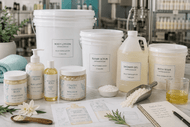
One of the first major decisions a bath, body, spa, or wellness brand must make is how it wants its products manufactured and delivered. Some businesses need finished, retail-ready products that can go directly onto shelves or into fulfillment centers. Others prefer to purchase product in bulk and handle packaging themselves. Many growing companies discover that the best answer is a combination of both.
These three paths—private label, bulk formulations, and hybrid manufacturing—can support very different business models. Choosing the right one affects your packaging, minimum order quantities, operating workload, per-unit economics, launch timeline, storage needs, and ability to scale.
The good news is that you do not need to understand every manufacturing detail before starting. What matters is having a clear idea of how you plan to sell or use the product, what responsibilities you want to manage internally, and what type of customer experience you want to create.
Our Custom Manufacturing Project Starter Kit was created to help brands understand these choices before committing to a project. It explains how private label, bulk, and hybrid programs work, who each model is best suited for, and what to expect as a project moves from idea to delivery.
It is easy to assume that all manufacturing relationships work the same way. In reality, the structure you choose determines which parts of the process the manufacturer handles and which parts remain your responsibility.
That distinction matters because producing the formula is only one part of creating a successful product. Packaging procurement, filling, sealing, labeling, quality checks, storage, freight, and final presentation all affect the outcome.
A new e-commerce brand may want a manufacturer to manage nearly everything so the finished units arrive ready for sale. A refill store may not need individual containers at all. A spa may want retail jars for customers while also purchasing gallons or pails for treatment rooms. A national brand may have its own filling infrastructure and need only consistent bulk formula.
None of these models is universally better than the others. The right choice depends on how your business operates.
Private label manufacturing is the most complete option for brands that want finished products ready to sell, display, or distribute.
Under a private label program, the manufacturer typically helps coordinate the formula, ingredients, fragrance, packaging, filling, sealing, labeling, quality checks, and shipment preparation. The result is a completed unit carrying the client’s branding.
This model works especially well for:
Private label reduces the number of operational steps the client must manage. Instead of purchasing raw ingredients, finding packaging vendors, producing the formula, filling containers, applying labels, and preparing cases for shipment, the brand works with one manufacturing partner to coordinate the finished project.
The exact scope varies by product, but a retail-ready private label project may include:
This level of support is valuable for businesses that want to focus on sales, marketing, customer acquisition, and brand development rather than learning how to operate a manufacturing line.
Brands interested in this route can learn more through The Midwest Sea Salt Company Private Label Program.
Private label is generally the strongest choice when presentation and convenience are central to the business model.
For example, an Amazon seller needs finished units that can be photographed, listed, packed, and routed into a fulfillment network. A boutique needs products that can be placed on shelves as soon as they arrive. A spa may need jars and bottles that match its branding and can be sold at the front desk.
In each case, the brand benefits from receiving a completed product rather than a drum, bucket, or bulk bag that still requires additional work.
Private label may also make sense when the business does not have appropriate space, staff, equipment, documentation systems, or quality procedures for filling product in-house.
Bulk formulations are manufactured products supplied in larger containers rather than individual retail packages.
Depending on the formula, bulk product may be delivered in bags, buckets, pails, drums, totes, or other commercial containers. The customer then uses the product for professional treatments, refill applications, internal packaging, or distribution through its own production operation.
This model is commonly used by:
Bulk formulations remove the cost and operational steps associated with individual retail packaging. That can create a more efficient structure when the customer already has a plan for filling, dispensing, or using the product.
Bulk is not simply a lower-packaging version of private label. It supports a fundamentally different operating model.
A refill store, for example, may purchase body wash or lotion in large containers and dispense it directly into customer-provided bottles. A spa may purchase massage cream or body scrub in gallons for treatment-room use. A growing brand may have its own packaging inventory and filling team but rely on an experienced manufacturer to produce the formula consistently.
In these situations, paying for individual jars, labels, seals, and assembly would create unnecessary cost and duplication.
Bulk programs can also make it easier to standardize one formula across several uses. The same lotion might be used in treatment rooms, guest amenities, refill stations, and retail filling operations depending on the customer’s structure.
Bulk manufacturing can create flexibility, but it also shifts more responsibility to the buyer.
A company purchasing bulk product may need to manage:
Before choosing bulk, a brand should honestly evaluate whether it has the staff, space, systems, and equipment needed to manage those steps reliably.
Bulk may lower certain manufacturing and packaging costs, but it is not automatically simpler if the customer is unprepared for the work that remains.
A hybrid approach combines private label retail products with bulk formulations.
This model is particularly valuable for companies that serve customers in more than one way. A spa may need small branded products for retail while purchasing the same or related formulas in gallons for treatment rooms. A refill company may sell finished starter packages while offering bulk refills. A hotel may use large-format product internally while selling coordinated retail items in its gift shop.
The hybrid structure allows the brand to create a consistent experience across multiple touchpoints without forcing every use case into the same package.
Consider a wellness spa developing a signature lavender collection.
The spa could order:
The fragrances and formulas can be designed to feel related, giving the customer a consistent experience whether receiving a service or purchasing a product.
This helps the business build recognition around a signature scent while using packaging formats that make sense for each application.
Retail and professional-use products have different economic requirements.
A beautifully labeled retail jar may justify a higher selling price because packaging, presentation, and shelf appeal are part of the customer experience. That same packaging may be unnecessary for a product used behind the scenes during a spa treatment.
By purchasing retail-ready units where presentation matters and bulk product where it does not, businesses can allocate packaging costs more intelligently.
This can improve margins, reduce waste, and make inventory easier to manage.
If the product will be sold through a website, marketplace, boutique, spa counter, or retail store, private label is usually the more practical option. Consumers expect finished packaging, clear labeling, and a professional presentation.
If the product will be dispensed, used during services, or filled internally, bulk may be more appropriate.
Owning packaging does not mean a company is prepared to fill products consistently. Filling liquids, thick creams, oils, scrubs, and dry products requires different equipment and handling methods.
Brands should consider whether they can control fill weights, prevent contamination, manage labels, track lots, seal containers, and maintain consistent output.
If those systems are not already in place, private label may save substantial time and prevent avoidable problems.
Packaging plays a large role in perceived value. A brand competing in premium retail may need coordinated jars, labels, colors, closures, and tamper-evident features.
Private label is designed around that complete presentation.
Bulk is more appropriate when the customer already owns the packaging or when the product will not be sold in individual units.
A product intended for treatment rooms, refill stations, hotel dispensers, or internal filling may not need retail packaging. A product intended for Amazon, retail shelves, gifting, or subscription boxes almost certainly does.
Many companies discover that the answer varies by channel, which is why hybrid programs are so useful.
A startup may begin with finished private label units because it needs simplicity. As volume grows, it may add bulk production for internal filling or professional accounts.
Another business may begin with bulk backbar product and later introduce a coordinated retail collection after customer demand develops.
The best manufacturing model is not always permanent. It can evolve as the business grows.
One of the easiest mistakes is comparing only the manufacturer's price while ignoring the total operating cost.
A bulk formula may appear less expensive because it excludes retail packaging and assembly. However, the buyer still has to account for containers, closures, labels, labor, equipment, storage, handling, rejects, quality control, and finished-goods preparation.
Private label includes more services, so its unit price reflects a more complete product.
The correct comparison is not simply bulk price versus private label price. It is the total cost required to create a finished, usable, compliant product under each model.
Packaging and formula must work together.
A thick scrub may require a wide-mouth jar. A lightweight oil may need a pump, treatment pump, or reducer. A salt blend may work well in a pouch but create challenges in a narrow-neck bottle. A product used in a refill environment has different packaging requirements than one shipped through Amazon.
Choosing packaging too early can create compatibility issues, unnecessary cost, or production delays.
A more reliable approach is to define the product, size, quantity, customer use case, and price target before finalizing the package.
New brands often want to launch a complete collection immediately. While the ambition is understandable, every additional SKU creates another formula, fragrance, label, packaging requirement, minimum order, inventory position, and reorder decision.
Starting with a focused product line can make the first launch easier to manage and provide real customer feedback before additional capital is committed.
A strong first SKU can become the foundation for an entire collection. Once the product earns repeat purchases, the brand can expand into related fragrances, sizes, or formats with greater confidence.
Most founders are not chemists, packaging engineers, production managers, or regulatory specialists. They should not be expected to arrive with every technical decision already made.
A good manufacturing partner should listen to the idea, understand the business model, explain trade-offs, and help determine which path fits the project.
That guidance may involve recommending private label, bulk, a hybrid structure, or a phased plan that changes over time.
The goal is not to push every customer into the same program. It is to build a manufacturing structure that supports the customer's actual business.
Before requesting a quote, it helps to understand the terminology, options, minimums, timelines, packaging considerations, and information needed to define a project.
Our Custom Manufacturing Project Starter Kit provides an overview of how we work with startups, e-commerce brands, spas, salons, hotels, refill stores, retailers, distributors, and national programs.
It also explains the differences between private label, bulk formulations, and hybrid manufacturing so you can approach the process with clearer expectations.
You do not need a finished formula or a complete packaging plan before contacting us. Many successful projects begin with a straightforward idea, a target quantity, a proposed size, and an understanding of the customer you want to serve.
From there, our team can help translate the concept into a practical product direction and guide you through the decisions required to move forward.
To learn more about creating finished, retail-ready bath and body products, visit The Midwest Sea Salt Company Private Label Program.
Whether your best path is private label, bulk, or a combination of both, the right structure should make your business easier to operate, protect your product quality, and give your brand room to grow.