
Lavender Bath Salt Recipe: Start with the Base, Then Plan the Scent
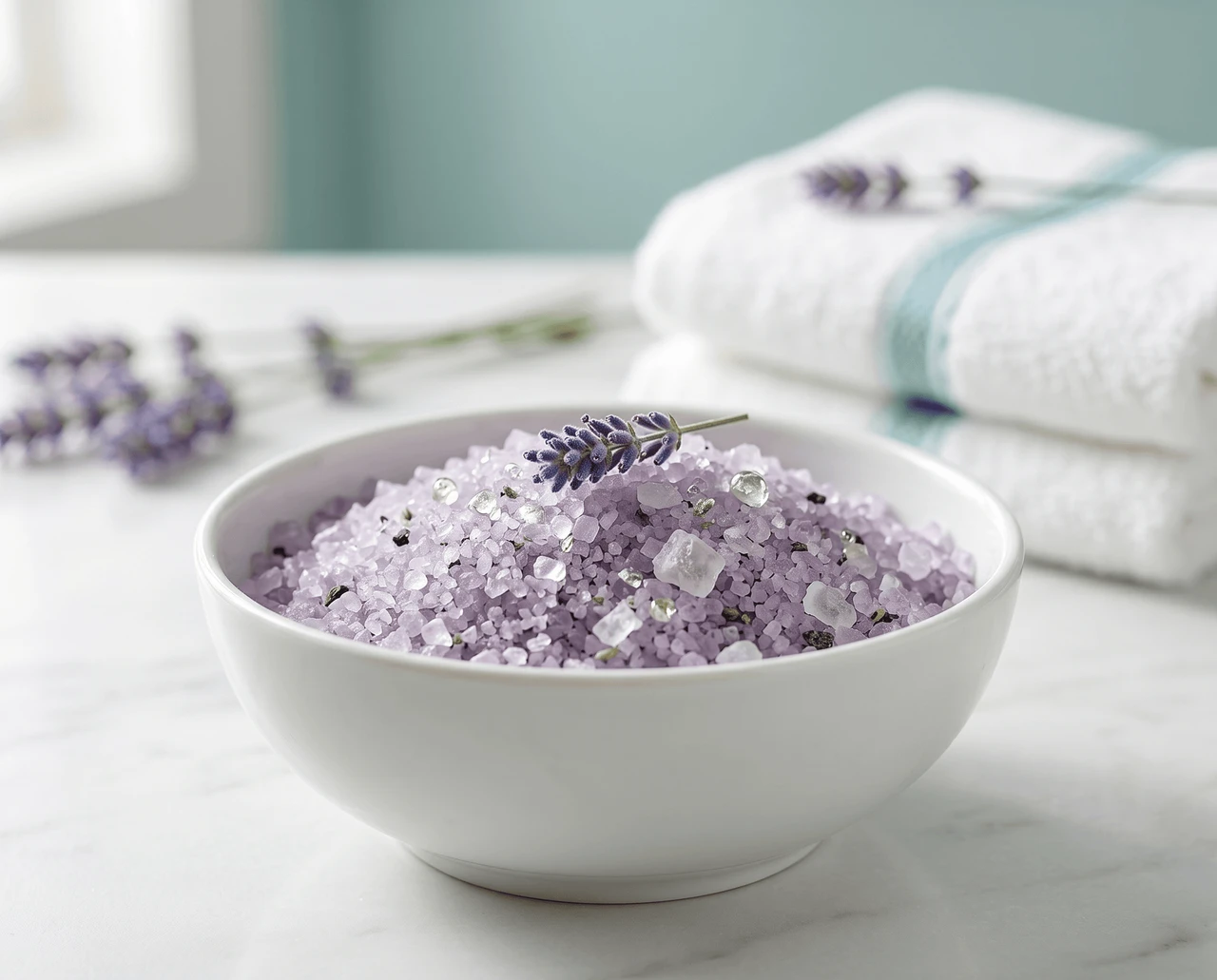
A lavender bath salt recipe needs more than a salt mixture and a drop count. The mineral base determines the dry texture and how the crystals dissolve; the scented portion needs an appropriate use level and a way to disperse oils in bathwater. Mixing thoroughly does not replace either requirement.
The practical starting point below is an unscented base. It lets you compare salt textures without presenting an incomplete essential-oil recipe as a retail-ready formula. For an immediate lavender bath, use a finished lavender soak according to its label.
Unscented Bath Salt Base
- 2 cups unscented Dead Sea salt
- 1 cup fine-grain unscented Mediterranean sea salt
- ½ cup unscented Epsom salt
These volume measurements are a home mixing guide, not a manufacturing specification. Different grain sizes pack differently in a measuring cup. For repeatable production, weigh ingredients and record the actual specification rather than scaling cups into a commercial batch.
Mixing the Base
- Check that each ingredient is unscented and suitable for bath use.
- Measure with clean, dry equipment into a dry bowl.
- Stir until the different salts are evenly distributed.
- Transfer to a suitable dry container and label the ingredients and preparation date.
- Use according to the bath directions supplied with the salts.
Combining three salts is a texture and composition choice, not proof that the blend performs better than a simpler soak. A single suitable bath salt can also be a reasonable starting point. Keep notes on grain size, clumping and dissolution if you want to compare versions.
How Lavender Changes the Formulation
Lavender Essential Oil supplies aroma, but it does not dissolve in water. Salt, baking soda and a carrier oil do not provide reliable water dispersion. Leaving an oil-coated salt mixture overnight does not make it water-soluble.
To turn a dry base into scented bath salts, use a complete formulation specifying the particular essential oil, its amount by weight, a compatible dispersing system and the finished-product directions. Follow the technical guidance for that complete formulation. Do not combine a generic “drops per cup” suggestion with a separately chosen solubilizer ratio.
Our guide to essential oils, dilution and bathwater dispersion explains this distinction in more detail. Without that formulation work, keep the base unscented and choose Pure Epsom Salt Soaking Solution – Soothing Lavender when you want a ready-to-use lavender option.
Botanicals and Other Additions
Dried lavender buds are visually attractive, but loose flowers add cleanup and do not solve oil dispersion. They may also be unsuitable for someone with a sensitivity to that botanical. Keep decorative materials outside the bath, or use a suitable bath sachet for a separately planned botanical soak. Remove it and clean the tub after use.
Changing the essential oil also changes the formulation requirements. A tested lavender formula is not automatically a suitable formula for peppermint, citrus or a multicomponent essential-oil blend.
Storage and Handling
Use clean, dry equipment and keep water out of the ingredients. A homemade mixture has no validated shelf life merely because it is in an airtight jar. Make a small amount, label its ingredients and preparation date, and discard anything contaminated or unexpectedly changed. Do not add water, fresh botanicals or extra oils to a stored blend. For gifts or products intended for sale, formulation, packaging and appropriate safety and stability work require separate consideration.
What Makes a Bath Salt Retail-Ready?
A home mixture is not retail-ready solely because it smells pleasant or looks consistent. A commercial product needs a defined formula, appropriate ingredient documentation, batch controls, suitable packaging, clear labeling and evaluation appropriate to the finished product. Adding a new scent or changing the container can require additional review.
Brands can discuss a proposed product through our private-label program, or compare bulk bath and body formulations when a finished option fits the project. Confirm the specific formula, order requirements, packaging and timing before committing to a launch.
Using Your Salt Blend
Follow the bath-use directions on the individual salts and use comfortably warm water. Let the crystals dissolve before entering. Stop if the bath causes stinging or irritation, and avoid use on broken or irritated skin. A salt bath is a personal-care routine, not a treatment for illness or a way to correct a mineral deficiency. If you have a condition that affects whether soaking is appropriate, ask your clinician before using bath products.