
How to Evaluate a Body Scrub Manufacturer: Formula Development, MOQ, Packaging, and Quality Control
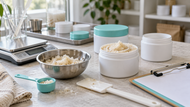
Choosing a body scrub manufacturer is not only a matter of comparing a per-unit price. The manufacturing partner you choose affects the formula, the feel of the finished scrub, the packaging experience, the consistency of every batch, and how confidently you can grow the product after launch.
Whether you are developing a new retail product, sourcing body scrubs in bulk, or building a private-label bath and body line, the right evaluation process helps you avoid expensive surprises. This guide explains the questions to ask before you place an order.
1. Start with the product brief
A strong manufacturing conversation begins with a clear product brief. Before requesting pricing, define what you want the scrub to do, who will use it, how it should feel, and where it will be sold.
Your brief should address the intended exfoliant, texture, fragrance direction, color, skin-feel goals, packaging format, target market, and expected order size. You do not need to have every detail finalized before speaking with a manufacturer. You do need enough direction for the manufacturer to determine whether the project belongs in a stock formula, a modified formula, or a more custom development path.
At Midwest Sea Salt Company, the starting point for a project is understanding the product concept and the practical requirements behind it. That makes the discussion more useful than treating every request as a generic body scrub.
2. Evaluate formula development—not just the sample
A sample can tell you whether you like the first impression of a product. It does not tell you everything about how the formula was developed or whether it can be reproduced consistently at scale.
Questions to ask about the formula
- Which exfoliant is being used, and why is that texture appropriate for the intended use?
- How does the formula behave during filling, shipping, storage, and normal consumer use?
- Can the fragrance, essential oil blend, botanical, or color be adjusted?
- Are the ingredients and their intended use clearly documented?
- What happens if the formula needs to be adjusted after the first sample?
The goal is not to make the formula as complicated as possible. A good manufacturer should help you choose a formula that delivers the desired experience while remaining practical to produce, fill, package, and reorder.
If you are comparing salt, sugar, coffee, botanical, or specialty scrubs, review the texture and use case carefully. The exfoliant affects the product experience, and the right choice depends on the audience and the positioning of the product—not simply on which ingredient sounds most marketable.
3. Understand MOQ and order planning
MOQ, or minimum order quantity, is one of the first commercial questions buyers ask, but it should not be viewed in isolation. The practical question is whether the order size fits your launch plan, packaging investment, storage capacity, and expected sales.
Ask whether the minimum applies to the formula, the finished product, the fragrance, the packaging, or a combination of those elements. Also ask how changes in jar size, label format, scent selection, or the number of SKUs affect the order plan.
Some brands need a focused launch with one or two products. Others are preparing a larger assortment for retail, hospitality, spa, or wellness use. A useful manufacturing partner should help you understand the tradeoffs instead of pushing you into unnecessary complexity.
For projects that need finished products under a brand name, review the Midwest Sea Salt Company private-label program. For businesses that already have a product direction and need larger-volume supply, compare it with the bulk formulations program.
4. Review packaging and filling capabilities
Packaging is part of the product, not an afterthought. The container affects the customer’s first impression, the filling process, the shipping profile, the shelf presentation, and the amount of product the customer can use without creating unnecessary mess.
Packaging questions worth asking
- Which container sizes and materials are available for the product?
- Can the manufacturer fill the selected package consistently?
- Are labels, lids, seals, cartons, or other components part of the project?
- Will the selected package work with the viscosity and texture of the scrub?
- How are packaging changes handled if the product expands into additional sizes?
For a body scrub, packaging also needs to fit the way the product is used. A wide-mouth jar may create a different experience than a pouch or another format. A manufacturer should be able to discuss the relationship between the formula, the filling process, and the packaging choice.
5. Ask how quality and batch consistency are managed
Quality control is what separates a promising first sample from a product that customers can trust after the third, fifth, or tenth reorder. Ask how the manufacturer evaluates incoming materials, production batches, filling, packaging, and finished goods.
Important topics include lot identification, documentation, sample approval, appearance, fragrance consistency, texture, fill weight, packaging checks, and the process for addressing a question about a finished batch. You should also understand which documents are available for the ingredients or finished product when appropriate.
The best answer is not always the longest technical explanation. It is a clear explanation of what is checked, when it is checked, and how the results are connected to the product you approved.
6. Confirm communication and project ownership
Manufacturing projects often involve decisions across formulation, purchasing, packaging, artwork, production, and fulfillment. Before moving forward, find out who coordinates the project and how changes are documented.
A reliable process should make it clear what has been approved, what is still under review, and which decisions could affect cost, timing, or the finished product. This is especially important when a brand is developing a custom fragrance, multiple SKUs, or a new packaging system.
At Midwest Sea Salt Company, the objective is to connect the product concept with a practical path to production. That means discussing the formula, packaging, order requirements, and intended market together rather than treating them as separate decisions.
7. Decide whether private label, bulk, or wholesale is the right fit
These terms are related, but they are not interchangeable.
- Private label is generally the right direction when you want a finished product sold under your brand, with an agreed formula and packaging approach.
- Bulk formulation may be a better fit when you need product in larger-volume containers or want to manage more of the downstream packaging yourself.
- Wholesale is useful when you are purchasing established products for resale rather than developing a custom product from the beginning.
Review the wholesale options alongside the private-label and bulk-formulation paths so the buying model matches your actual business plan.
A practical body scrub manufacturer checklist
Before approving a manufacturer, make sure you can answer these questions:
- Does the manufacturer understand the product experience you are trying to create?
- Can the formula, texture, fragrance, and packaging be matched to the intended market?
- Do the MOQ and order structure fit your launch and reordering plan?
- Is the filling and packaging process appropriate for the scrub?
- Are quality checks and documentation explained clearly?
- Can the partner support the project as the brand adds products or increases volume?
- Do you know which decisions are approved and which are still subject to review?
Build the project around a repeatable product
The best body scrub manufacturer is not simply the one with the lowest quote. It is the partner that can help you move from a product idea to a repeatable finished product with a clear formula, suitable packaging, realistic order planning, and dependable communication.
Midwest Sea Salt Company works with businesses evaluating private-label and bulk bath and body products. If you are comparing manufacturing paths, begin with the private-label information and bulk-formulation information, then contact the team with the product concept, packaging direction, and order goals you are considering.