
Brown Sugar Body Scrub: A Simple Recipe and Ready-Made Options
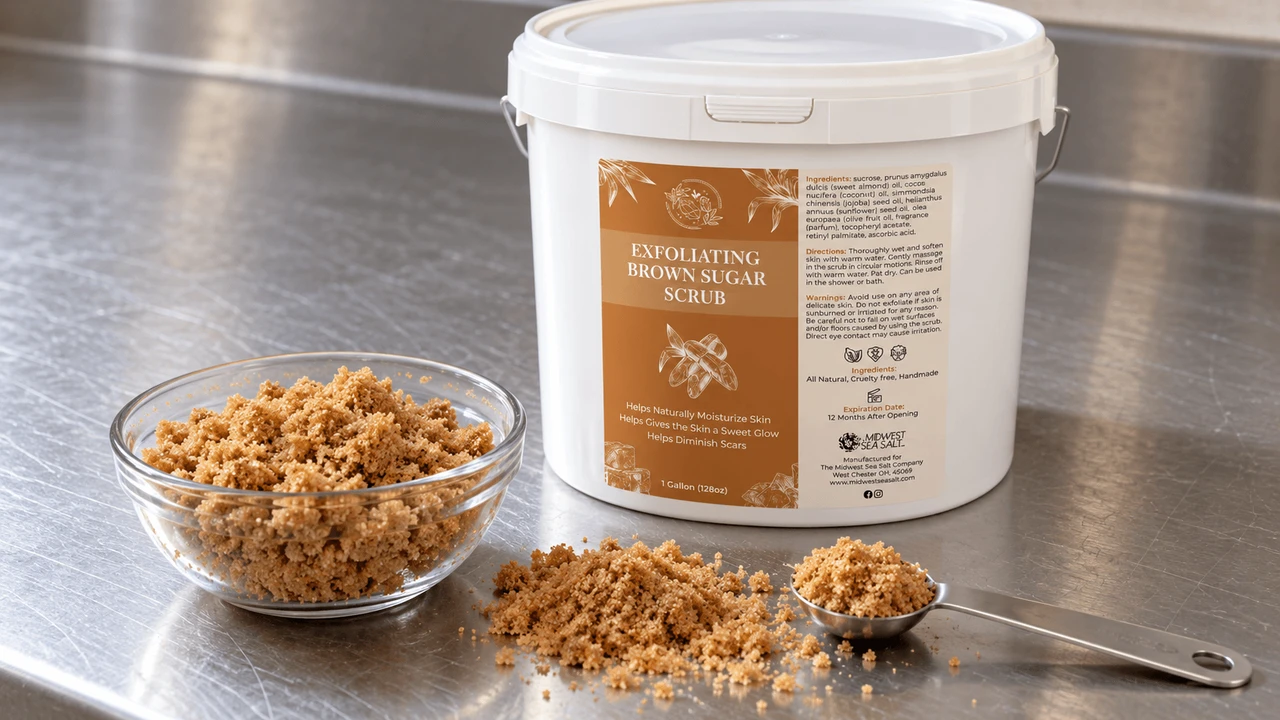
A brown sugar body scrub uses sugar particles to provide physical exfoliation, but the sugar is only part of the experience. The oils, other particles, emulsifying ingredients, fragrance, and packaging determine how a scrub spreads, rinses, and fits into a regular routine. That is why a home sugar-and-oil mixture can feel very different from a finished brown-sugar scrub or an emulsified sugar polish.
This guide includes a small, published home-recipe method, then compares it with actual products from The Midwest Sea Salt Company. The aim is to help you decide whether you want a fresh personal-use experiment, an established body-scrub format, or an emulsified option with a different rinse feel.
What brown sugar contributes to a scrub
Brown sugar provides particles that move across the skin during gentle massage. As with any physical exfoliant, the experience depends on the particle characteristics, how much product is applied, how wet the skin is, and the pressure used.
The ingredient's familiar kitchen origin does not make forceful scrubbing necessary or appropriate. Start with the intended body area and your skin's tolerance. Texture preference is personal: a product that feels substantial to one person can feel too abrasive to another.
Our sea salt versus brown sugar scrub comparison helps put those material choices in context. The more useful question is how the finished scrub behaves—not whether sugar or salt is universally better.
A small brown sugar scrub recipe for one session
The following quantities adapt NOW Foods' published Radiant Glow Castor Oil Scrub recipe. Its optional essential oils are omitted. This is a personal-use body method, not a stability-tested retail formula or a recommendation to make jars for sale.
- 1 tablespoon brown sugar.
- 1 teaspoon castor oil.
- 1 teaspoon liquid coconut oil.
- One-quarter teaspoon honey.
Use a clean, dry bowl and spoon. Measure the ingredients as written rather than adding water, citrus juice, fresh fruit, or fragrance to improve the mixture. Those additions would create a different preparation with its own suitability questions.
Mixing and application
- Combine the measured sugar, oils, and honey in the dry bowl.
- Stir until the particles and liquids are evenly distributed.
- Check a small area first and stop if the preparation irritates. A small-area check cannot guarantee future tolerance.
- Apply a small amount to damp body skin and massage with light, short circular movements.
- Rinse thoroughly with lukewarm water and pat dry.
- Discard the remaining mixture after the session and clean the bowl and shower surface.
Keep this body method away from eyes, broken skin, sunburn, and irritated areas. Oils can leave slippery residue, so rinse the shower or tub promptly. Do not use a rougher feel as a reason to increase pressure or continue over an uncomfortable area.
Why a fresh mixture needs a different storage plan
A home mixture is handled in an uncontrolled setting and may encounter water during use. It should not be assigned a months-long shelf life just because the ingredients sound familiar. Make only what is needed for the session and do not store a wetted leftover.
Adding vitamin E would not establish a preservation system or prove the product suitable for repeated wet handling. Commercial stability, microbial protection, packaging, and expected use conditions require separate assessment. For related background, the FDA explains how handling and storage affect cosmetic shelf life.
What is different about our finished brown-sugar scrub?
Exfoliating Brown Sugar Scrub, 128 oz is not simply brown sugar and one oil. Its listed formula includes brown sugar and Dead Sea salt, with glycerin, sweet almond and jojoba oils, oat and arnica extracts, tocopherol, and sunflower oil. Essential oils are an optional customization.
The inclusion of Dead Sea salt is a meaningful buying detail. If you are looking specifically for a sugar-only formula, read the ingredient list rather than assuming the product name tells you every exfoliating material present. If you enjoy a mixed mineral-and-sugar body texture, that combination may be precisely the format you want to evaluate.
The gallon-sized tub also answers a different purchasing need from a small home mixture. Consider your usage and handling plan before choosing the larger format. A dry dispensing utensil and a closed container are useful habits for any product that is repeatedly opened near a shower or treatment area.
Traditional scrub versus emulsified sugar scrub
An emulsified scrub includes ingredients intended to help the oil-containing base interact with water. That can change the way the scrub distributes and rinses compared with a simple sugar-and-oil mixture. The exact feel still belongs to the finished formula rather than the word emulsified alone.
For example, Hey, Babe Emulsified Sugar Scrub—Warm Vanilla Sugar, 8 oz lists sugar with coconut oil, shea butter, sweet almond and jojoba oils, cetyl alcohol, emulsifying wax, and other ingredients. It also lists phenoxyethanol and caprylyl glycol. Those components make it a different formula from the brown-sugar-and-Dead-Sea-salt tub.
Choose the smaller vanilla option when you want to evaluate that creamy, emulsified product format and its warm scent. If you prefer a brighter aroma within the same general style, Orange Hard Candy Emulsified Sugar Scrub provides a citrus-and-candy direction. Scent preference and rinse feel are separate reasons to compare the two.
How to choose without buying a large tub first
The Luxury Scrub Sampler Set contains four-ounce samples of brown sugar, Himalayan salt, Dead Sea salt, and coffee scrub varieties. It can help you compare the actual textures and bases before selecting a larger format.
Evaluate one product at a time using its directions. Notice how it scoops, spreads on damp skin, and rinses, and how your skin feels afterward. Do not assume every product will feel the same because several list conditioning oils. Check the exact ingredient panel for the sample and full-size option being considered.
How often should you use a body scrub?
There is no schedule that suits every skin type and scrub. The American Academy of Dermatology recommends matching exfoliation to your skin and avoiding over-exfoliation. Consider other products in the routine, especially if they already cause sensitivity or peeling.
Follow the finished product's directions and keep pressure gentle. More frequent use is not an automatic route to smoother skin. Persistent redness, stinging, or discomfort calls for stopping and reassessing the routine rather than choosing a stronger scrub.
Which option fits your goal?
Choose the small home method if you want a fresh personal-use experiment and are willing to discard leftovers. Compare the finished brown-sugar scrub when its mixed sugar-and-salt texture and larger format suit your routine. Try an emulsified eight-ounce scrub when you want to explore a creamier rinse experience and a specific scent without beginning with a professional-size tub.
Browse our brown sugar scrub collection with those differences in mind. For a branded retail project, bring the desired texture, scent, package, and quantity to the private label team. A kitchen recipe, a personal-care purchase, and a commercial formulation are three different decisions, and the right product depends on which one you are making.