
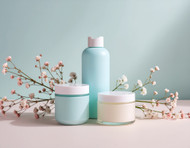
Magnesium Wellness Flakes, Oil & Cream Trio - Unscented
₫1,156,923.08

For many businesses entering the bath and body space, one of the first major questions is not what scent to choose or what label design to use. It is more foundational than that: should the business pursue private label products or bulk formulations?
This decision shapes much more than production format. It affects packaging, pricing, launch strategy, operational workflow, freight, internal labor, and the overall customer experience. Yet many businesses make the decision too quickly, assuming one path is automatically more professional, more flexible, or more scalable than the other.
At Midwest Sea Salt Company, we support both through our Private Label and Bulk Formulations programs. The right path depends entirely on how your business operates, what experience you want to deliver, and where you want the work to happen.
Through Salt Lab, we want to make that choice easier to understand. This article breaks down the difference between the two models, where each one shines, and how to determine which makes the most sense for your business.
Private label is the right path when you want finished products prepared as retail-ready units under your brand. The formula, scent direction, packaging structure, and final presentation are built to support a customer-facing product that can be sold directly, displayed in-store, or used as a branded retail offering.
Private label is typically used when the business wants a finished product that is ready to go rather than a bulk input that still needs downstream packaging or handling. It is often chosen by e-commerce brands, boutiques, spas with retail shelves, hotels creating branded guest products, and founders launching new bath and body lines.
In a strong private label setup, the product is more than content in a container. It is a brand experience.
Bulk formulations, by contrast, are designed for businesses that need product in larger quantities without individual retail packaging. The product is manufactured to order and delivered in a format such as bags, buckets, drums, totes, or other larger-scale handling formats depending on the category.
This path is ideal when the business either uses the product operationally or manages packaging and downstream filling itself. It is especially common for spas, treatment rooms, hospitality backbar programs, refill concepts, professional-use systems, and brands with their own filling capabilities.
Bulk is not a lesser version of private label. It is a different operational model. In many cases, it is the more efficient and more strategic choice.
One of the biggest misconceptions in the market is that private label sounds “more finished” while bulk sounds “more basic.” That is not the right way to think about it. The better distinction is workflow.
Private label places more of the finished product work upstream so the product arrives already packaged for its intended customer-facing use. Bulk places more of the handling or product deployment downstream, which makes sense when the business has its own internal systems for filling, treatment use, refill dispensing, or other non-retail applications.
So the question is not which one is better in the abstract. The question is where the work belongs in your business model.
Private label tends to be the better fit when the product needs to be sold directly in a finished retail format. That includes situations such as:
Private label is also attractive when packaging is a major part of the product identity. If the look of the jar, pouch, bottle, tube, or label is central to how the product will be perceived, private label often makes the most sense.
For businesses exploring that route, our Private Label program is designed to guide brands through product category, scent direction, packaging, and production in a way that supports long-term growth.
Bulk formulations are typically the stronger path when the product is meant for internal use, professional use, refill use, or downstream packaging handled by the client. That often includes:
Bulk can also be ideal when per-unit efficiency matters more than finished retail presentation. Removing individual packaging and retail prep often streamlines the system and creates a better fit for repeat operational use.
For many commercial or professional buyers, that is exactly the goal. They do not need retail-ready units. They need consistent product, predictable supply, and packaging formats that support how the product will actually be used.
Packaging is one of the biggest practical differences between private label and bulk, and it affects more than appearance. It affects labor, materials, freight, storage, and the margin structure of the program.
With private label, the finished product includes packaging decisions at the unit level. That means each jar, tube, pouch, or bottle becomes part of the cost structure and the customer experience. That may be exactly what the business needs. But it also means the packaging needs to justify itself operationally and financially.
With bulk, the packaging is built around handling efficiency. The priority shifts from shelf presentation to workflow support. Does it store well? Move well? Dispense well? Fit treatment rooms, refill stations, or production transfer needs?
In other words, private label packaging is often a merchandising decision. Bulk packaging is often an operations decision.
Another useful way to evaluate these paths is to think about the end experience. In private label, the end customer usually encounters the product exactly as it arrives from the manufacturer. The packaging, fill, scent, and final look all contribute to the customer’s first impression.
In bulk, the end customer may never see the original shipped format. The product may be dispensed in a spa treatment, transferred to another container, used in a refill environment, or incorporated into a larger service or hospitality system.
That changes what matters. In private label, shelf presence and final presentation become crucial. In bulk, consistency, handling, and fit-for-use often matter more.
The right model also depends on where the business is headed. A startup e-commerce brand may need a retail-ready private label product because the finished unit is the business itself. A multi-location spa may need bulk because the product supports services first and retail second. A hospitality group may need both. A refill concept may almost always lean bulk. A boutique retailer may do better with either wholesale or private label depending on how much customization matters.
Growth strategy matters because the model you choose should support not just the first order, but the ongoing operating rhythm of the business. How will reorders work? Who will handle filling? Where will labor happen? How much SKU complexity makes sense? What kind of packaging system is realistic long term?
These are strategic questions, not just purchasing questions.
In many cases, the smartest answer is not either-or. It is both.
A hybrid model can be extremely effective for businesses that need both customer-facing retail products and larger-volume operational product. For example, a spa may use bulk scrubs, oils, or soaks in treatment rooms while also offering private label retail products for guests to purchase. A hotel may use one system for backbar or amenities and another for branded retail. A brand may source bulk for internal filling while using private label packaging for select finished SKUs.
Hybrid models work especially well when there is a unified scent or product identity across both formats. That cohesion helps create a stronger overall brand experience while still allowing each part of the operation to use the most practical format.
You can explore both paths in more detail through our Private Label and Bulk Formulations pages.
It is also worth mentioning that some businesses do not actually need either private label or bulk. In some cases, Wholesale may be the better fit. If your goal is to carry proven bath and body products without going through custom development, wholesale can be a more direct path.
This is especially relevant for retailers or resellers who want ready-to-sell product but do not necessarily need exclusive branding or a custom manufacturing program. Understanding that distinction early can save time and keep the business from choosing a more complex route than necessary.
If you are deciding between private label and bulk, it helps to step back and ask a few simple but clarifying questions:
The answers usually make the correct path much clearer.
Private label and bulk formulations are both valuable. Neither one is inherently more advanced, more premium, or more scalable in every situation. They are tools designed for different business models.
Private label makes the most sense when you need finished, branded, retail-ready products that deliver a polished customer-facing experience. Bulk formulations make the most sense when you need high-quality product in larger volumes without individual retail packaging. And for many businesses, a hybrid structure ends up being the smartest long-term solution.
If you are exploring which path fits your goals, start by looking at how your business actually operates. Think about where the product will be used, who needs to handle it, what the customer will see, and how the system needs to function over time.
To keep exploring, visit Salt Lab, learn more about Private Label, review Bulk Formulations, or browse Wholesale.
The right path is the one that fits your workflow, your brand, and your long-term growth plan.